




How gum disease is linked to brain and whole-body health, and why your wisdom teeth may be the place to start.
Reviewed by Dr. Nima Massoomi, DMD, MEd, MD, board-certified oral and maxillofacial surgeon · 20+ years on the University of the Pacific dental school faculty
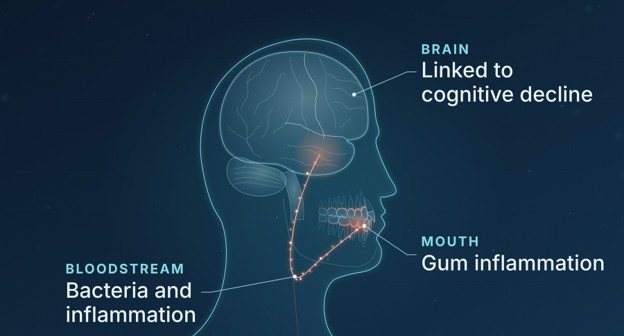
Most people shrug off a little pink in the sink after flossing. But that small amount of bleeding may be telling you more than you think. A growing body of research suggests that the health of your gums and the health of your brain may be more closely connected than anyone once realized.
Scientists are still working out exactly how the mouth and brain interact, but the early findings are worth knowing about, because getting gum disease under control early is one of the simplest health steps available to you.
At Bay Area Surgical Arts, with offices in Cupertino and Los Gatos, board-certified oral and maxillofacial surgeon Dr. Nima Massoomi works alongside your general dentist and periodontist to help remove the sources of harmful bacteria: infected and diseased teeth, especially problem wisdom teeth. For select patients, we also offer advanced saliva DNA testing to identify the specific bacteria driving their gum disease.
| KEY TAKEAWAYS
• Gum disease is linked to cognitive decline, heart disease, diabetes and pregnancy complications. These are associations, not proof of cause. • Gum disease often causes no pain. Bleeding, swollen or receding gums are warning signs worth having checked. • Problem wisdom teeth can trap gum disease bacteria and damage the neighboring molar without symptoms. Removing them is often the first step. • A panoramic X-ray is considered the standard of care for evaluating wisdom teeth, and saliva DNA testing identifies high-risk bacteria like Aa. |
Can You Have Gum Disease and Not Know It?
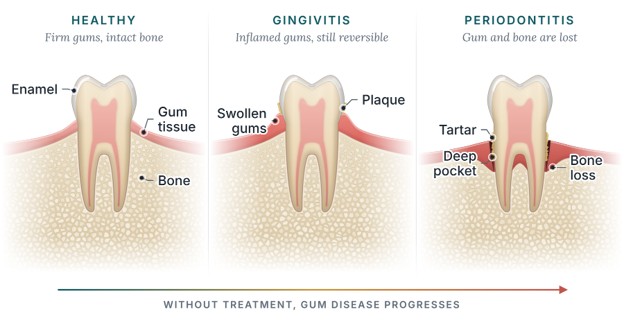
Gum disease rarely hurts in its early stages, which is why it can progress for years unnoticed. It usually starts as gingivitis: irritation and inflammation of the gum tissue that is fully reversible with good care. Left untreated, gingivitis can advance to periodontitis, a more serious infection that damages the gums and gradually destroys the bone that holds your teeth in place.1
Can Gum Disease Affect Your Memory?
Multiple studies have found an association between periodontal disease and a higher risk of cognitive decline and dementia.2 Some researchers have even found bacteria linked to gum disease in the brain tissue of certain people with Alzheimer’s disease,3 a discovery that has drawn significant attention to the oral-brain connection.
It’s important to be precise about what this means. The research shows a link, not proof that gum disease causes dementia, and scientists are still studying the mechanisms involved. Even so, the pattern has appeared across enough studies that it’s one more good reason to take your gum health seriously before symptoms become severe.
How Could Gum Disease Reach the Brain?
The leading theory centers on inflammation. Chronic gum infection doesn’t always stay in the mouth. Bacteria can enter the bloodstream through damaged gum tissue, and the body’s inflammatory response can spread well beyond the gums. Over time, this kind of persistent, body-wide inflammation is a recognized concern for brain health.
Shared risk factors add another layer. Conditions like diabetes and heart disease are tied to both gum disease and cognitive decline, which makes it harder to separate cause from correlation, but makes the case for prevention even stronger.
What Other Health Problems Are Linked to Gum Disease?
The brain isn’t the only place researchers have found a connection. Poor oral hygiene and gum disease have been linked to a range of other medical conditions, which is why dentists and physicians increasingly see oral health as part of overall health rather than a separate concern:
- Heart disease and stroke. People with gum disease have higher rates of cardiovascular disease, likely tied to the same chronic inflammation.4
- The link runs both ways: diabetes raises the risk of gum disease, and gum disease can make blood sugar harder to control.5
- Pregnancy complications. Gum disease in expectant mothers has been associated with preterm birth, low birth weight, and preeclampsia.6 Hormonal changes during pregnancy also make gums more prone to inflammation, so oral health deserves extra attention before and during pregnancy.
- Rheumatoid arthritis. Bacteria associated with gum disease have been found in the joint fluid of people with arthritis.7 One study found evidence of infection with Aa, the same high-risk bacterium discussed below, in more than half of the rheumatoid arthritis patients tested, and researchers believe it may help trigger the disease in susceptible people.8
- Respiratory infections. Bacteria from the mouth can be breathed into the lungs, raising the risk of pneumonia, especially in older adults.9
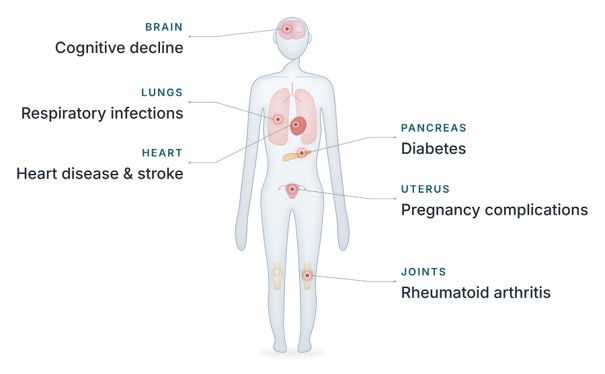
As with the brain research, most of these findings are associations rather than proof of cause. But together they make a strong case that controlling the bacteria behind gum disease protects far more than your smile.
Who Is Most at Risk for Gum Disease?
Anyone can develop gum disease, but some people have more reason to stay vigilant:
- Adults over 50. Gum disease and memory concerns both become more common with age.
- People with diabetes. Blood sugar control and gum health affect each other.
- Anyone who smokes or vapes, now or in the past. Tobacco is one of the strongest risk factors for gum disease, and vaping and marijuana carry risks too.
- Those with a family history of gum disease or dementia.
- People who still have their wisdom teeth, especially teeth that are impacted or only partly erupted.
- Anyone overdue for a dental visit. Gum disease can advance quietly between appointments.
Smoking Anything Counts: Vaping and Marijuana
Tobacco isn’t the only concern. We’re seeing the same pattern in patients who vape or smoke marijuana. In a large national survey of U.S. adults, people who used cannabis frequently had deeper gum pockets, more attachment loss and higher odds of severe gum disease.10
Vaping isn’t a safe alternative, either. People who vape show more gum inflammation and attachment loss than nonsmokers,11 and vaping shifts the bacteria under the gums toward a mix that looks more like a smoker’s than a nonsmoker’s.12 In one recent study, gum attachment loss worsened over six months only in the participants who vaped, not in the cigarette smokers or nonsmokers.13 Researchers are still working out how vaping compares with cigarettes overall, but the message is clear: smoking or vaping anything raises your risk.
What Are the Warning Signs of Gum Disease?
Bleeding gums are not normal, even if it only happens occasionally. If you notice any of the following, it’s worth scheduling an evaluation rather than waiting to see if it goes away:
| WARNING SIGNS OF GUM DISEASE
• Bleeding when you brush or floss • Red, tender or swollen gums • Gums pulling away from the teeth • Teeth that feel loose or shifting • Bad breath that won’t go away • A lingering bad taste in the mouth |
Receding gums or loose teeth in particular can signal that the condition has moved beyond its earliest stage.
Can Wisdom Teeth Cause Gum Disease? Why Removal Is Often the First Step
Wisdom teeth (third molars) are among the hardest teeth to keep clean. When they are impacted or only partly erupted, a flap of gum tissue can sit over the tooth and trap food and bacteria. The tight space behind the neighboring second molar can also form a deep pocket that a toothbrush and floss simply can’t reach.
Studies have found that the bacteria associated with gum disease often collect around wisdom teeth, even in young adults who have no pain or other symptoms.14 Over time, that infection can damage the gum and bone supporting the healthy second molar next door.
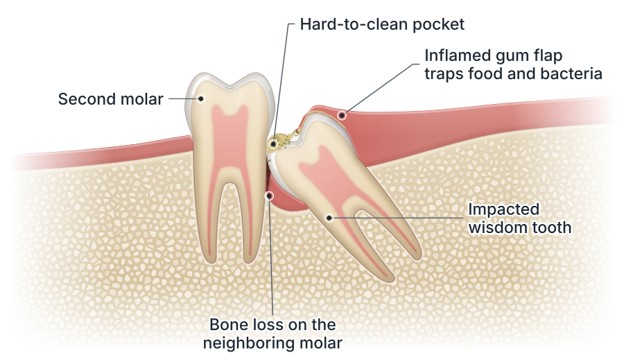
For many patients, removing problem wisdom teeth is an important first step in reducing the bacteria that cause gum disease.15 It eliminates hard-to-clean pockets and hiding places for bacteria, so the care you receive from your general dentist or periodontist has a better foundation to work from. The same is true of other teeth that are badly infected or too damaged to save: removing them takes away a persistent source of bacteria and inflammation.
Why Do I Need a Panoramic X-Ray for My Wisdom Teeth?
Patients sometimes ask why they need an X-ray before any decision is made about their wisdom teeth. The answer is that most of what matters is hidden below the gumline. A panoramic X-ray, often called a Panorex, captures all of your teeth, both jaws, the jaw joints and the sinuses in a single image.
A panoramic X-ray is considered the standard of care for evaluating wisdom teeth. The American Association of Oral and Maxillofacial Surgeons describes it as the most commonly accepted imaging method for impacted wisdom teeth,16 and the American Dental Association’s current recommendations call for panoramic imaging when wisdom teeth need to be assessed and treatment planned.17 It shows what an exam alone can’t:
- Whether wisdom teeth are present, and whether they are impacted or coming in at an angle
- How close the roots are to the nerve in the lower jaw and to the sinuses in the upper jaw
- Damage to the neighboring second molar, such as decay, root damage or bone loss
- Cysts or other problems that can develop around wisdom teeth
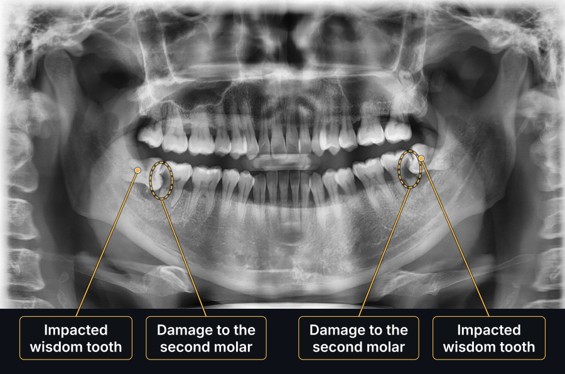
Many of these problems cause no pain until they are advanced,16 so the X-ray is often the only way to catch them early. The radiation dose is low: a panoramic X-ray delivers roughly 14 to 24 microsieverts,18 about the same as two to three days of the natural background radiation everyone receives.19
How We Keep Your Radiation Dose Low
We take radiation exposure seriously, which is why we use the Vatech Green CT 2, an imaging system designed for low-dose X-rays. It has two separate sensors: one dedicated to 2D panoramic images and another for 3D cone-beam CT (CBCT) scans.
Some offices take a 3D CBCT scan for every patient and then build a panoramic view from that data. We do the reverse: we start with a true panoramic X-ray and take a CBCT scan only when we need a closer look, such as when the roots sit close to the nerve. That matters because a CBCT scan typically delivers several times the radiation of a panoramic X-ray. An analysis of published data found average adult CBCT doses of about 84 to 212 microsieverts, depending on the size of the scan,20 compared with roughly 14 to 24 microsieverts for a panoramic X-ray.18 This step-by-step approach follows current recommendations to take X-rays only when they’re clinically needed.17
What Is a Saliva DNA Test for Gum Disease?
Not all gum disease is caused by the same bacteria, and some are far more aggressive than others. One example is Aggregatibacter actinomycetemcomitans, often called Aa, which is strongly associated with severe, fast-progressing gum disease.21
For select patients with gum disease, Bay Area Surgical Arts uses an advanced saliva test processed by OralDNA Labs. After a quick, painless oral rinse, the lab uses DNA analysis to identify which of 11 types of bacteria linked to gum disease are present, including Aa, and measures how much of each.
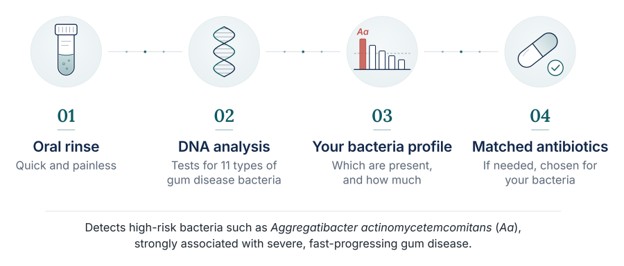
Different bacteria respond to different antibiotics. Knowing your exact bacterial profile means that if antibiotics are part of your treatment, they can be matched to the bacteria you actually have rather than chosen by guesswork. The test also flags high-risk bacteria like Aa that call for closer attention.
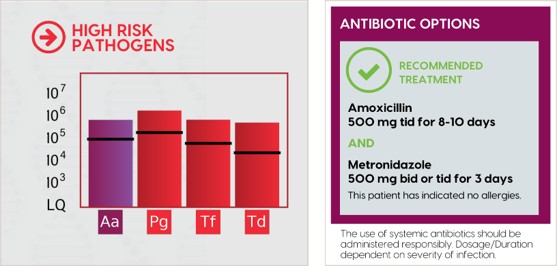
Bay Area Surgical Arts is one of the few oral surgery practices in the Bay Area that performs this testing routinely. Combined with removing infected teeth, it gives patients a more precise, targeted path to getting harmful bacteria under control.
How Does an Oral Surgeon Fit Into Your Gum Health Care?
Bay Area Surgical Arts is an oral surgery practice, not a general dental office, so we don’t provide routine cleanings or ongoing periodontal maintenance. Instead, Dr. Massoomi works closely with your general dentist and periodontist. We focus on the surgical side: evaluating and removing wisdom teeth and other diseased or infected teeth, and identifying high-risk bacteria. Your dentist and hygienist then continue your day-to-day gum care.
Daily Habits That Help Prevent Gum Disease
Healthy gums come down to consistent daily habits more than occasional effort. Food is a source of energy for the bacteria that cause gum disease: the bacteria in plaque feed on the bits of food left on and between your teeth, especially sugars and starches. The less food that’s left lying around, the less those bacteria can grow.
That’s why we recommend a simple routine after every meal: brush, then floss, then rinse with mouthwash. Regular cleanings with your general dentist or hygienist still matter, even if your routine at home is solid, because they catch problems a toothbrush and floss can’t.
| DAILY HABITS FOR HEALTHY GUMS
• After every meal: brush, then floss, then rinse with mouthwash • Brush for two minutes: soft-bristled brush and fluoride toothpaste • Floss: clears the food and plaque your brush can’t reach • Get regular cleanings with your general dentist or hygienist • Don’t smoke or vape anything: tobacco, vapes and marijuana all raise your risk • Manage diabetes: blood sugar and gum health are linked • Eat well and stay active: supports whole-body health |
Schedule a Consultation
Healthy gums support a healthy body, and growing research suggests they may support a healthier mind as well. What’s certain is that gum disease is treatable, especially when it’s caught early and its sources are addressed.
Have you noticed bleeding gums, or do you still have your wisdom teeth? Schedule a consultation with Dr. Nima Massoomi at Bay Area Surgical Arts. Call our Cupertino office at 408-253-6084 or our Los Gatos office at 408-358-5000, or request an appointment online at www.bayareasurgicalarts.com. We’ll evaluate your wisdom teeth with a panoramic X-ray, talk through whether saliva testing makes sense for you, and coordinate next steps with your dentist.
| OUR OFFICES
• Cupertino: 10393 Torre Ave, Suite L, Cupertino, CA 95014 · 408-253-6084 • Los Gatos: 15780 Los Gatos Blvd, Los Gatos, CA 95032 · 408-358-5000 • Online: www.bayareasurgicalarts.com |
Frequently Asked Questions
Can gum disease cause dementia?
Research has found that gum disease is associated with a higher risk of cognitive decline and dementia, and bacteria linked to gum disease have been found in the brain tissue of some people with Alzheimer’s disease. However, an association is not proof that gum disease causes dementia, and scientists are still studying the connection. Treating gum disease and keeping your mouth healthy is a simple, low-risk step for your overall health.
Is vaping or smoking marijuana bad for your gums?
Yes. Frequent marijuana use has been linked to deeper gum pockets and more severe gum disease, and people who vape show more gum inflammation and attachment loss than nonsmokers. Vaping also shifts the bacteria under the gums toward a smoker-like mix, and in one recent study gum damage worsened over six months only in the people who vaped. Smoking or vaping anything raises your risk.
Do I need a panoramic X-ray before wisdom tooth removal?
Yes. A panoramic X-ray is considered the standard of care for evaluating wisdom teeth. The American Association of Oral and Maxillofacial Surgeons calls it the most commonly accepted imaging method, and current American Dental Association recommendations call for panoramic imaging to assess wisdom teeth and plan treatment. It shows impaction, how close the roots are to the nerve and sinuses, and damage to neighboring teeth that an exam alone can’t see.
Is a panoramic X-ray safe?
Yes. A panoramic X-ray uses a very low dose of radiation, roughly 14 to 24 microsieverts. That is about the same as two to three days of the natural background radiation everyone receives from the environment. Current recommendations call for taking X-rays only when they are clinically needed, and a single panoramic image shows all of your teeth, both jaws, the jaw joints, and the sinuses in one quick scan. At Bay Area Surgical Arts, we start with a low-dose panoramic X-ray and take a 3D scan only if it’s needed.
Should wisdom teeth be removed if they don’t hurt?
Not always, but no pain doesn’t necessarily mean a wisdom tooth is healthy. Studies have found that gum disease bacteria often collect around wisdom teeth even in people with no symptoms, and damage to the neighboring second molar can progress quietly. The best way to decide is a clinical exam with a panoramic X-ray, so your surgeon can see the tooth’s position, its roots, and any effect on nearby teeth.
What is a saliva test for gum disease?
It’s a simple oral rinse that is sent to a lab, where DNA analysis identifies and measures 11 types of bacteria linked to gum disease, including the high-risk bacterium Aggregatibacter actinomycetemcomitans (Aa). Knowing exactly which bacteria are present helps match antibiotics to your infection if they’re needed. Bay Area Surgical Arts is one of the few oral surgery practices in the Bay Area that offers this testing routinely to select patients.
Does Bay Area Surgical Arts do teeth cleanings?
No. Bay Area Surgical Arts is an oral surgery practice with offices in Cupertino and Los Gatos, so we don’t provide routine cleanings or periodontal maintenance. We work alongside your general dentist and periodontist, focusing on evaluating and removing wisdom teeth and other infected or damaged teeth, and on identifying high-risk bacteria with saliva testing. If you need a dentist for cleanings and ongoing care, we’re happy to refer you to top-notch dentists in our network who share our whole-body approach to oral health.
| ABOUT DR. NIMA MASSOOMI
Dr. Nima Massoomi, DMD, MEd, MD, is a board-certified oral and maxillofacial surgeon at Bay Area Surgical Arts, with offices in Cupertino and Los Gatos. He has been on the faculty of the University of the Pacific, Arthur A. Dugoni School of Dentistry, for more than 20 years. |
References
-
National Institute of Dental and Craniofacial Research. Periodontal (gum) disease. National Institutes of Health. https://www.nidcr.nih.gov/health-info/gum-disease
-
Guo H, Chang S, Pi X, et al. The effect of periodontitis on dementia and cognitive impairment: a meta-analysis. Int J Environ Res Public Health. 2021;18(13):6823. doi:10.3390/ijerph18136823
-
Dominy SS, Lynch C, Ermini F, et al. Porphyromonas gingivalis in Alzheimer’s disease brains: evidence for disease causation and treatment with small-molecule inhibitors. Sci Adv. 2019;5(1):eaau3333. doi:10.1126/sciadv.aau3333
-
Lockhart PB, Bolger AF, Papapanou PN, et al. Periodontal disease and atherosclerotic vascular disease: does the evidence support an independent association? A scientific statement from the American Heart Association. Circulation. 2012;125(20):2520–2544.
-
Preshaw PM, Alba AL, Herrera D, et al. Periodontitis and diabetes: a two-way relationship. Diabetologia. 2012;55(1):21–31.
-
Sanz M, Kornman K; Working Group 3 of the Joint EFP/AAP Workshop. Periodontitis and adverse pregnancy outcomes: consensus report. J Clin Periodontol. 2013;40(Suppl 14):S164–S169.
-
Témoin S, Chakaki A, Askari A, et al. Identification of oral bacterial DNA in synovial fluid of arthritis patients with native and failed prosthetic joints. J Clin Rheumatol. 2012;18(3):117–121.
-
Konig MF, Abusleme L, Reinholdt J, et al. Aggregatibacter actinomycetemcomitans-induced hypercitrullination links periodontal infection to autoimmunity in rheumatoid arthritis. Sci Transl Med. 2016;8(369):369ra176.
-
Scannapieco FA, Bush RB, Paju S. Associations between periodontal disease and risk for nosocomial bacterial pneumonia and chronic obstructive pulmonary disease: a systematic review. Ann Periodontol. 2003;8(1):54–69.
-
Shariff JA, Ahluwalia KP, Papapanou PN. Relationship between frequent recreational cannabis (marijuana and hashish) use and periodontitis in adults in the United States: National Health and Nutrition Examination Survey 2011 to 2012. J Periodontol. 2017;88(3):273–280. doi:10.1902/jop.2016.160370
-
Charde P, Ali K, Hamdan N. Effects of e-cigarette smoking on periodontal health: a scoping review. PLOS Glob Public Health. 2024;4(3):e0002311.
-
Thomas SC, Xu F, Pushalkar S, et al. Electronic cigarette use promotes a unique periodontal microbiome. mBio. 2022;13(1):e00075-22. doi:10.1128/mbio.00075-22
-
Xu F, Aboseria E, Janal MN, et al. Comparative effects of e-cigarette aerosol on periodontium of periodontitis patients. Front Oral Health. 2021;2:729144. doi:10.3389/froh.2021.729144
-
Blakey GH, Marciani RD, Haug RH, et al. Periodontal pathology associated with asymptomatic third molars. J Oral Maxillofac Surg. 2002;60(11):1227–1233.
-
Dicus-Brookes C, Partrick M, Blakey GH, et al. Removal of symptomatic third molars may improve periodontal status of remaining dentition. J Oral Maxillofac Surg. 2013;71(10):1639–1646.
-
American Association of Oral and Maxillofacial Surgeons. The management of impacted third molar teeth. AAOMS clinical paper. https://aaoms.org/wp-content/uploads/2024/07/impacted_third_molars.pdf
-
Benavides E, Krecioch JR, Allareddy T, et al. American Dental Association and American Academy of Oral and Maxillofacial Radiology patient selection for dental radiography and cone-beam computed tomography: clinical recommendations. J Am Dent Assoc. 2026;157(1):20–35.e5. doi:10.1016/j.adaj.2025.10.013
-
Ludlow JB, Davies-Ludlow LE, White SC. Patient risk related to common dental radiographic examinations: the impact of 2007 International Commission on Radiological Protection recommendations regarding dose calculation. J Am Dent Assoc. 2008;139(9):1237–1243.
-
National Council on Radiation Protection and Measurements. Ionizing Radiation Exposure of the Population of the United States. NCRP Report No. 160. Bethesda, MD: NCRP; 2009.
-
Ludlow JB, Timothy R, Walker C, et al. Effective dose of dental CBCT: a meta analysis of published data and additional data for nine CBCT units. Dentomaxillofac Radiol. 2015;44(1):20140197. doi:10.1259/dmfr.20140197
-
Haubek D, Ennibi OK, Poulsen K, et al. Risk of aggressive periodontitis in adolescent carriers of the JP2 clone of Aggregatibacter (Actinobacillus) actinomycetemcomitans in Morocco: a prospective longitudinal cohort study. Lancet. 2008;371(9608):237–242.
